 Digital Styrke
Sports club
Bergen Agility Klubb
A dog agility club with 234 members ran its website on WordPress, its training calendar in Teamup, its membership list in the national kennel club's system, its volunteer rota in a Google spreadsheet and its competition results in a separate organiser system. Five places to keep updated, none of which talked to each other. Now there is one.
Visit the site →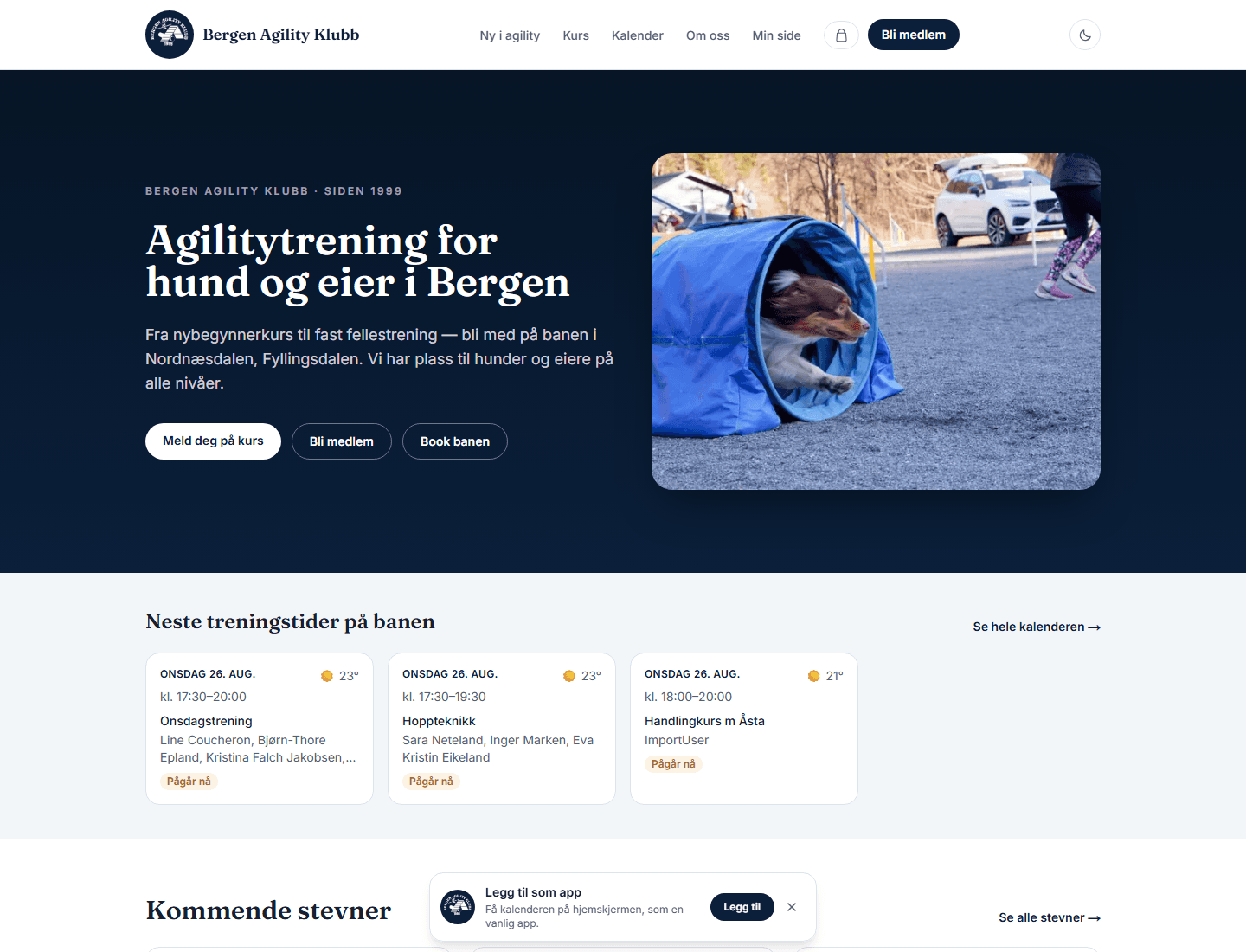
- 234
- members migrated
- 38 %
- logged in within 48 hours
- Alle
- dogs in the club, each with their own results
- 5 → 1
- systems to maintain
The starting point
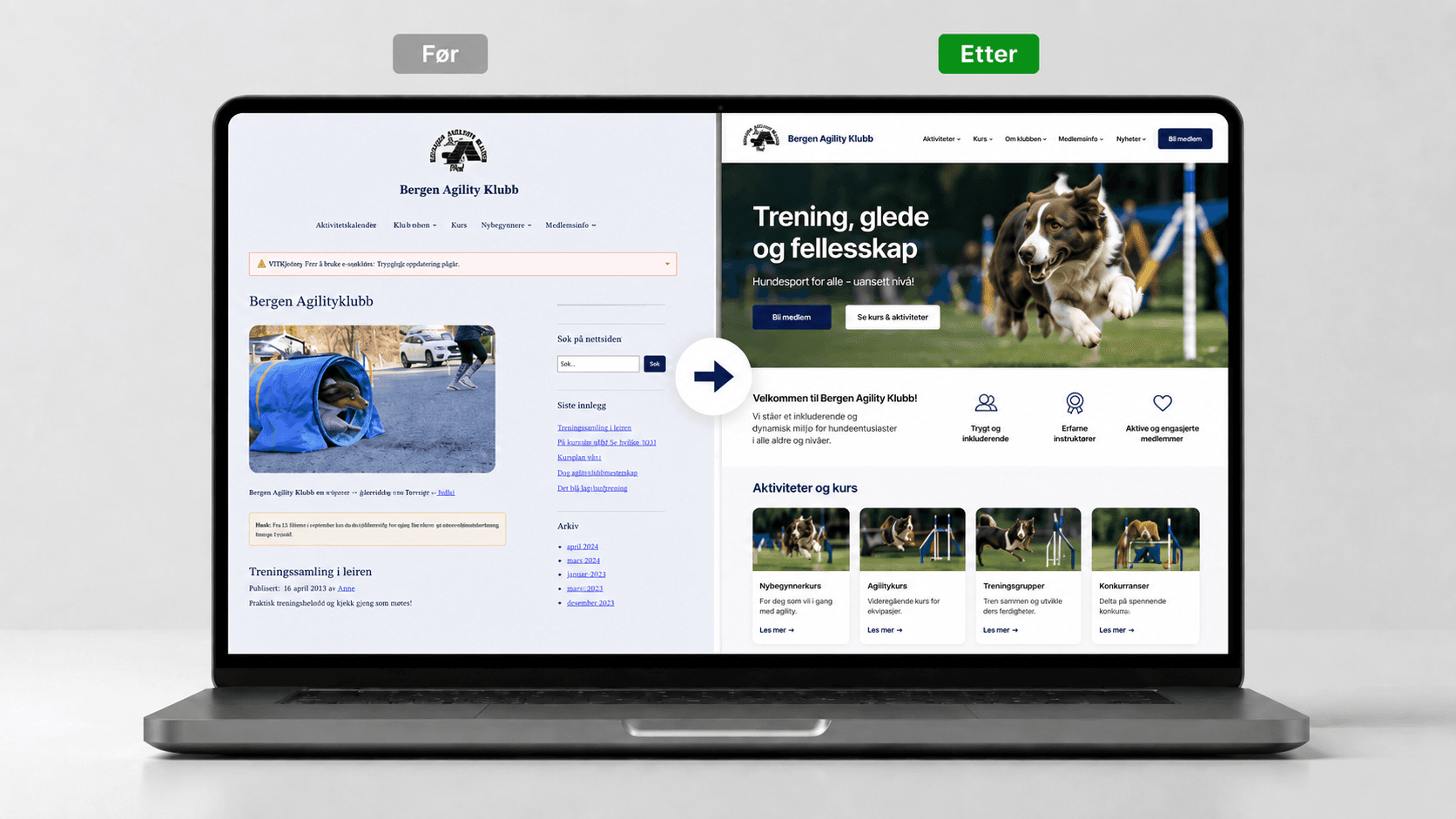
The club did not have one problem, it had five systems. The member list sat with the kennel club, the training slots in Teamup, the courses in a form, the volunteer rota in a spreadsheet and the competition results in the organiser system. None of them knew about each other, so the same name had to be typed in again every time it appeared somewhere.
The old WordPress site was also slow, and the domain pointed at a subpage after an earlier move. People who had bookmarked the club ended up somewhere that no longer existed.
We mapped how the club works
Before we wrote a line of code, we went through how the club actually runs. How a course comes about, who has to do what when someone signs up, what happens between a training slot being set up and the dog standing on the course, how volunteer shifts get shared out, and who is left with the follow-up work.
We did that together with the whole board. They hold expertise in agility and in running a club that no supplier can read their way to, and they set aside a lot of time to explain how the club works today, right down to the details only they know. That insight is the difference between a system built for the club and a generic solution the club has to adapt to.
That mapping decided what was worth building. Every step where someone had to copy a name, fetch a list or chase a message is a step the system can take instead.
The goal was never a prettier website. The goal was to remove the work that has nothing to do with dogs, so the board, the instructors and the members get their time back for what they are actually in the club to do, which is training dogs.
Thanks to the board for the hours they put into this. Without that time it would have become another website, not a system the club can actually run on.
What we built
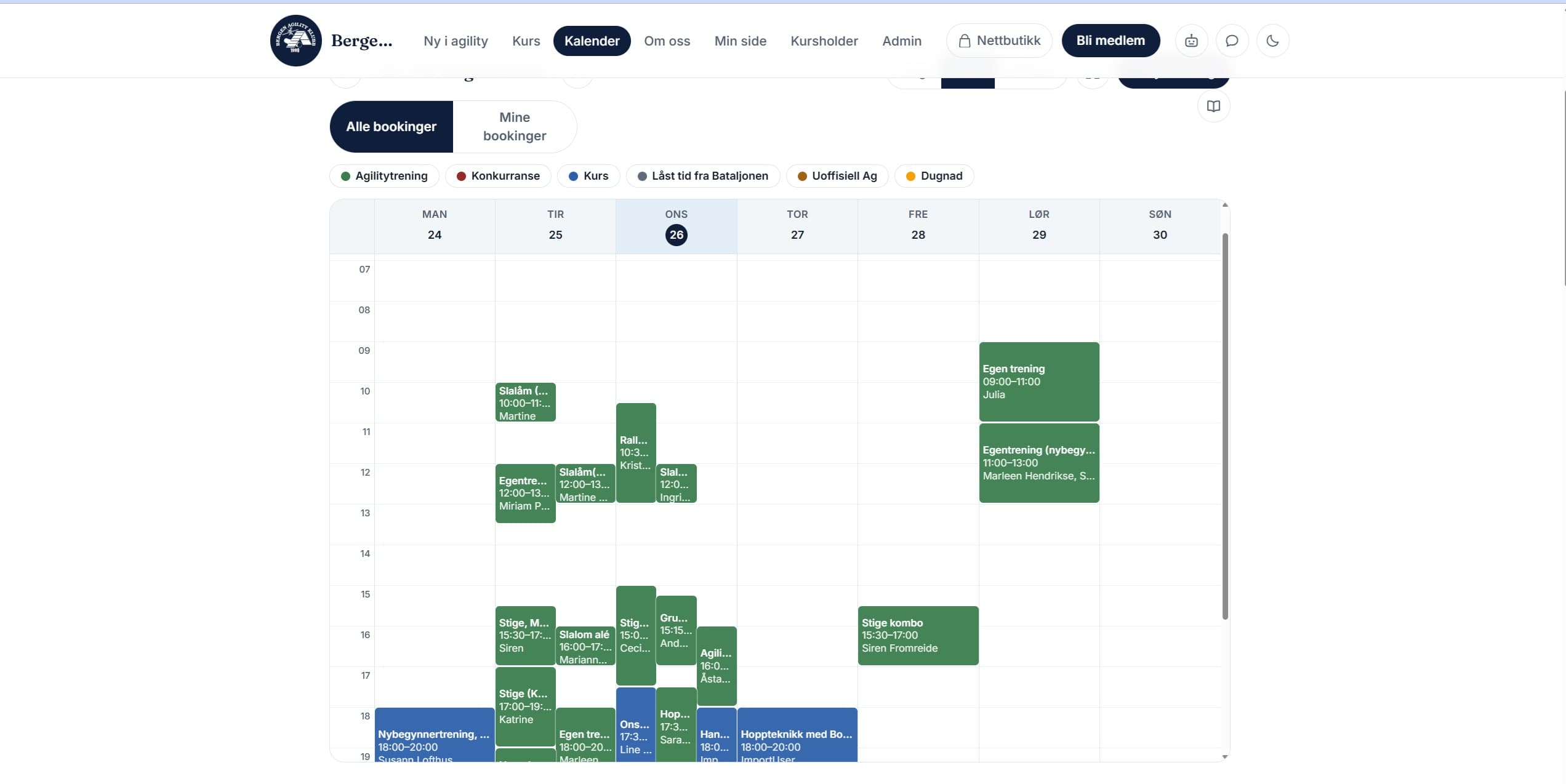
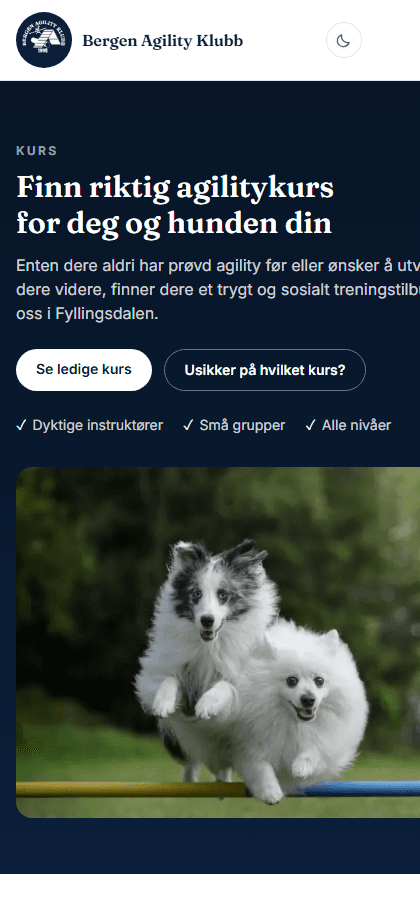
One solution with membership at its core. Your account exists because you are a member, pulled nightly from the kennel club, and everything else hangs off it: which dogs you handle, which courses you attend, when you have booked the court, and which shifts you have signed up for.
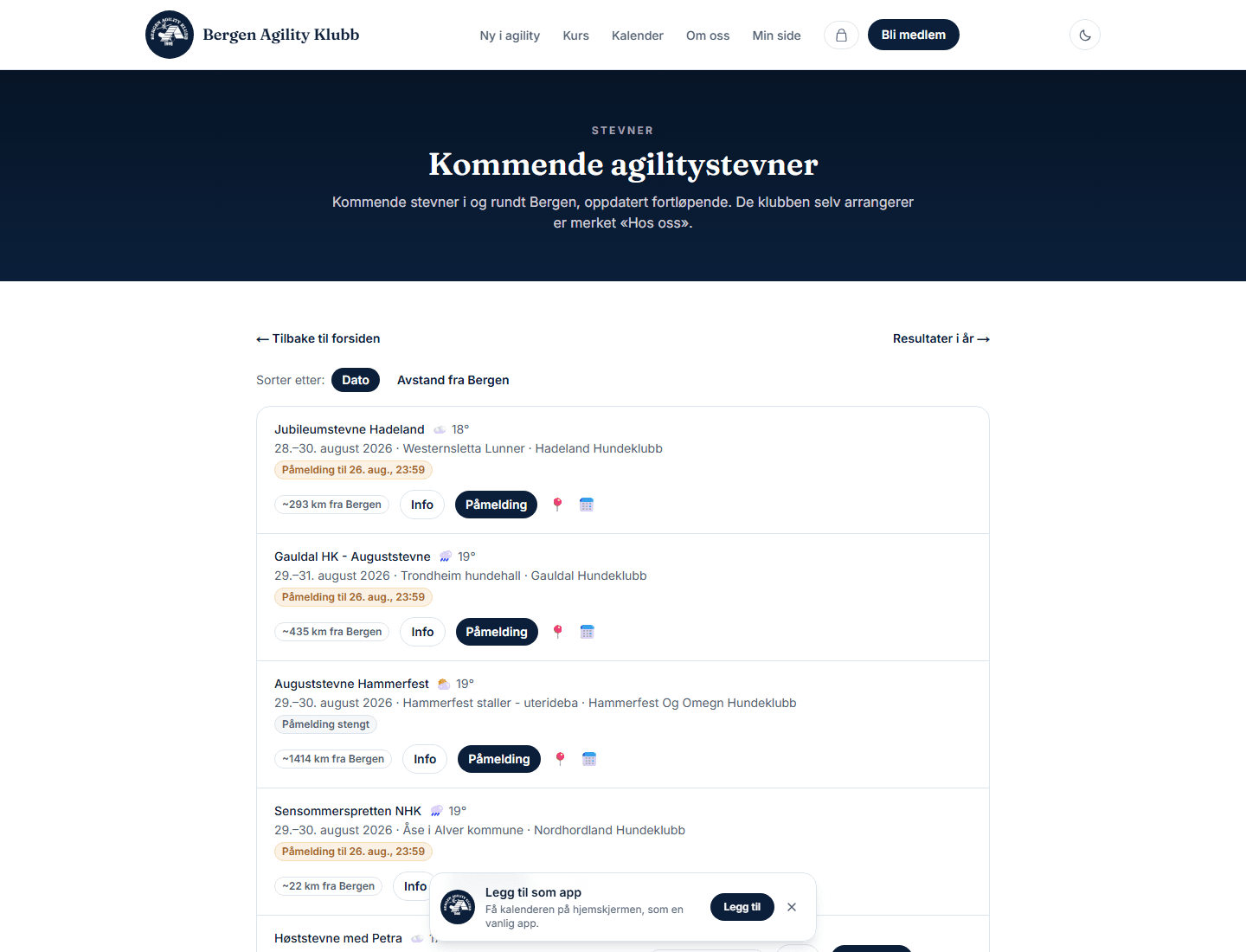
We pulled in the results for every single dog in the club. Start lists, results and classes are read straight from the organiser system, so members no longer have to go looking for how it went, and each dog's page knows which class it competes in and how many qualifying results remain before moving up.
The migration
234 members were migrated without anyone having to register. Accounts were created from the kennel club's member list, and each person received an email with their own link straight to 'choose a password'. Not a link to a form where you first have to request a link.
The email went out at 7pm on a Monday. 26 had logged in before the evening was over, 43 the next day. Two days later, 86 of 225 active members had taken up their account, and 36 of them had installed the app.
Old addresses from the WordPress era were not abandoned. Those still sitting in bookmarks and in Google are forwarded to the right page. Not to the front page, which would ask people to search again for something they had already found.
The details that decide it
The volunteer rotas for competitions lived in a Google spreadsheet. They now live in the system, with shifts members sign up for themselves, and with an A4 landscape printout, one day per sheet, where open slots are lines to write on. A rota on the wall is as much a form as it is an overview.
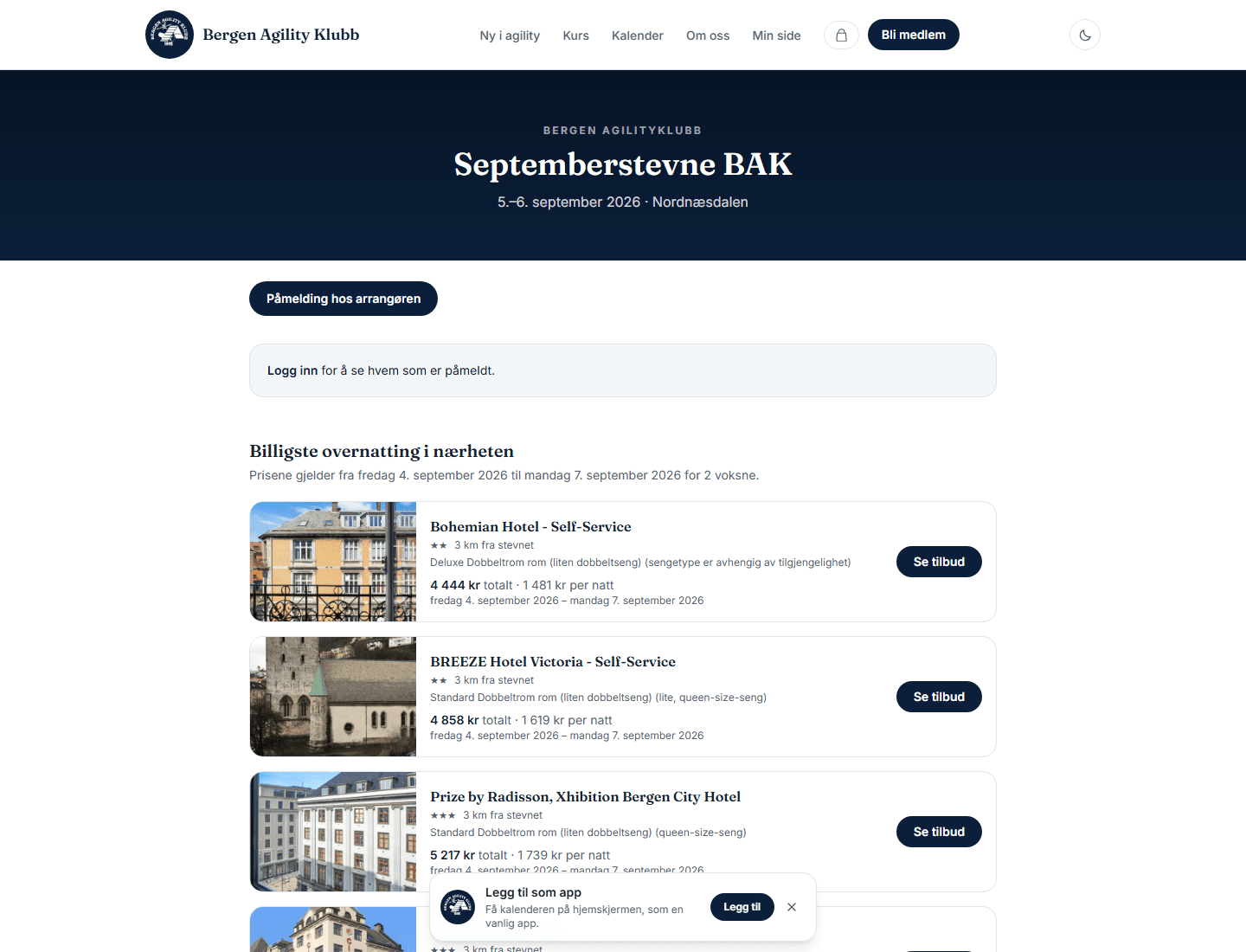
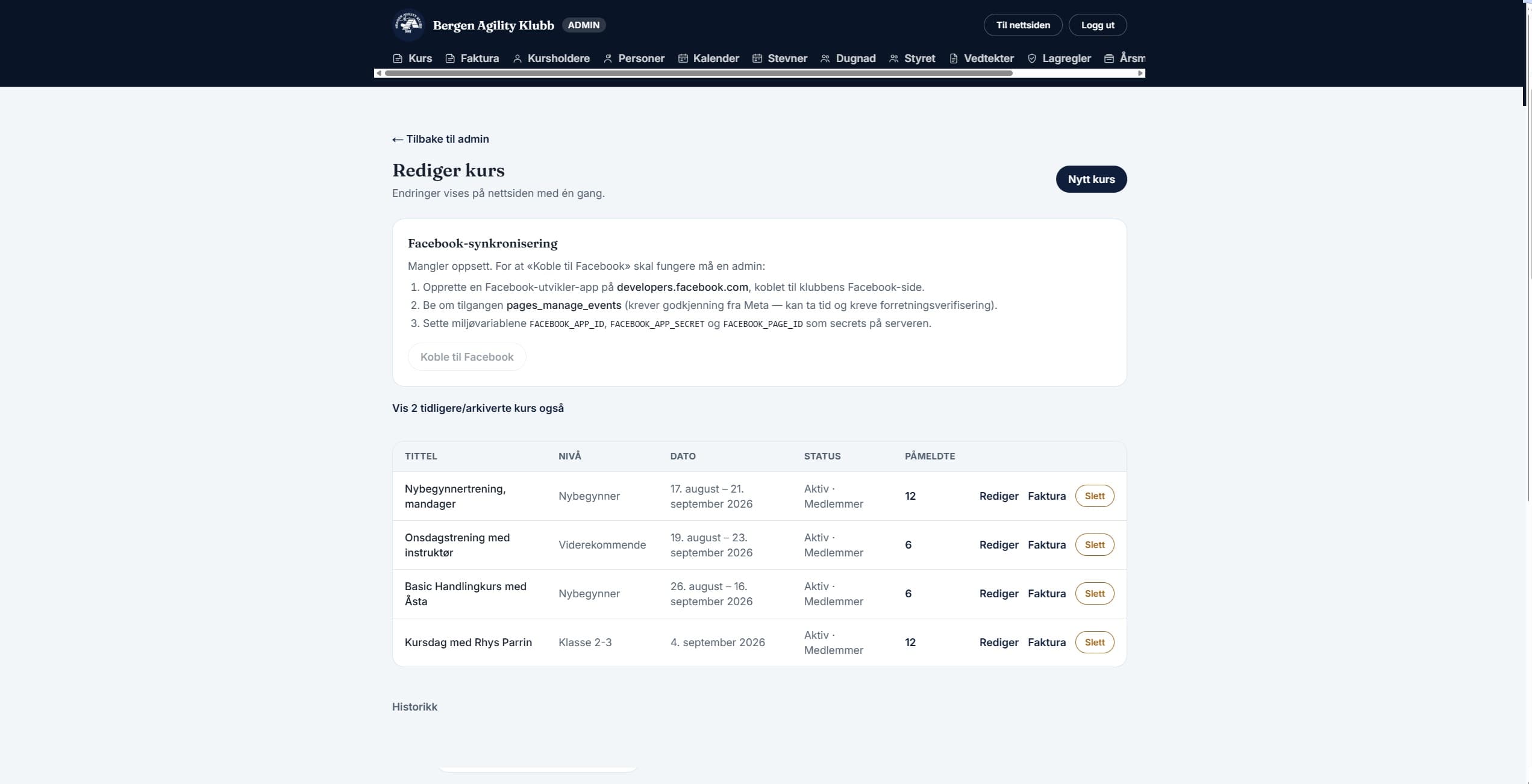
Details like this are not decoration. The question 'where do we stay?' came up anyway, usually in a Facebook thread someone had to scroll back to find. Now the answer sits where the trip is being planned.
The outcome
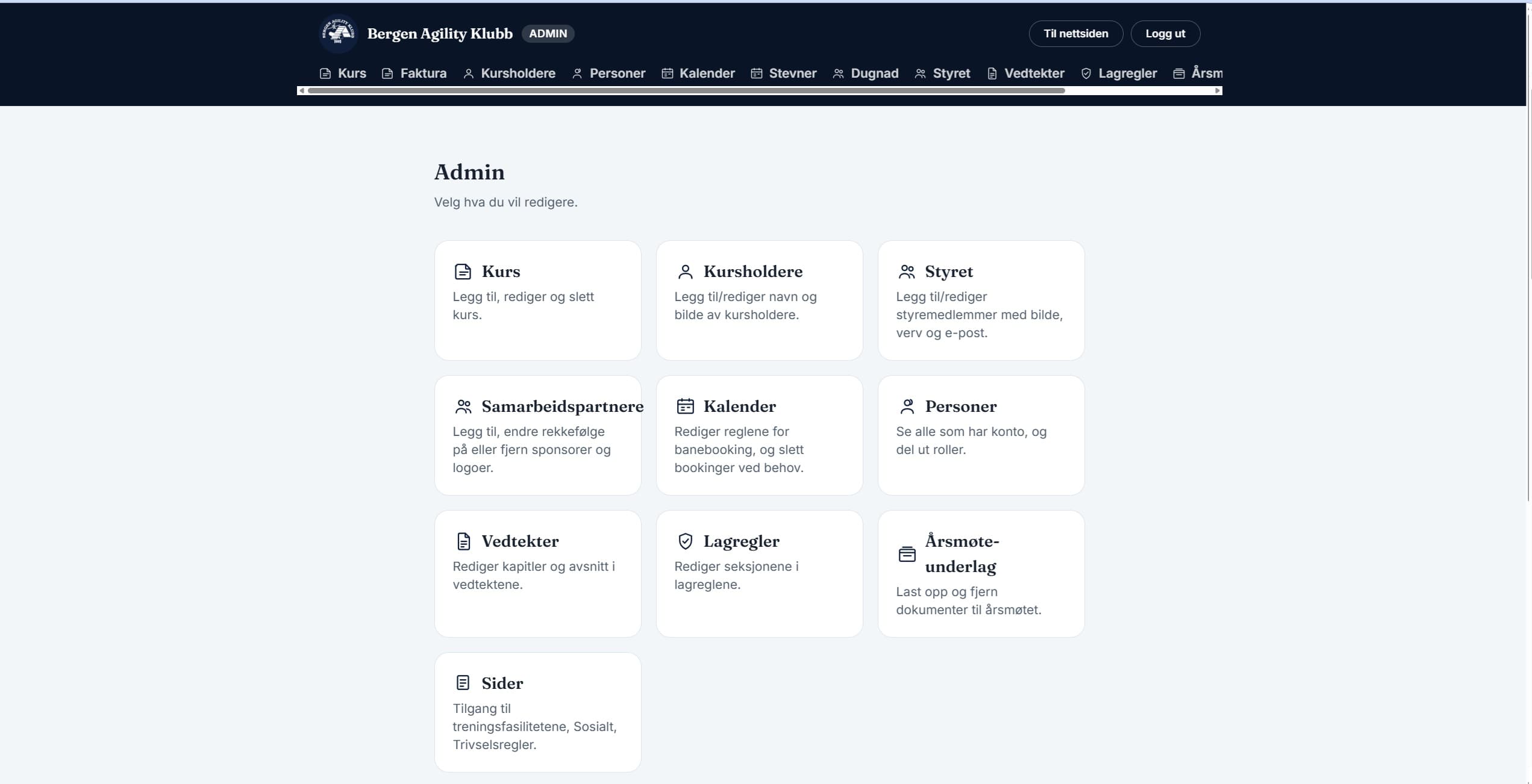
The board maintains one place instead of five. The member list keeps itself in step with the kennel club, competitions and results come in on their own, and the calendar is the club's own. Courses fill up with a waiting list without anyone keeping it by hand.
And the members got something they did not have: an app on their phone that tells them when training moves, shows their dog's results and class, and lets them book the court from the car.
Erik is fast and efficient. I really like the new options in the booking, and it is already being built to work for a future hall as well.
What we delivered
- Court calendar with booking, participants and push notifications
- Course sign-up with waiting list and automatic participant role
- Member register synced nightly with the national kennel club
- Competitions, start lists and results for every dog in the club
- Volunteer rotas with QR code and A4 printout
- Training log per dog, with skills and goals
- Installable app with notifications
- Admin surfaces the board runs itself
Does your club have the same mess?
We build solutions that keep themselves up to date, so the board no longer maintains the same information in five places.
Get in touch